Loading...
20 June 2025
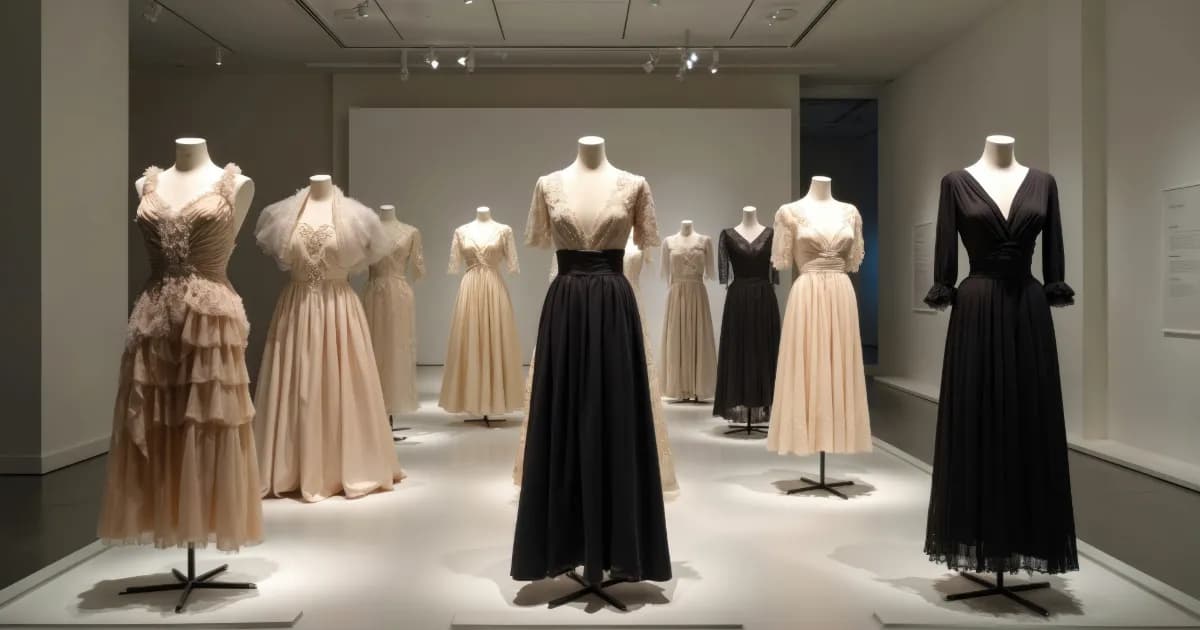
Lace, with its delicate beauty and intricate patterns, has graced human attire for centuries, a timeless symbol of elegance, romance, and craftsmanship. But as we hurtle into the future, what becomes of this beloved textile? Far from being relegated to dusty vintage archives, lace is poised for a dazzling metamorphosis, evolving into a futuristic marvel that redefines fashion itself. Imagine: the Futuristic Lace Dress – a garment that transcends mere aesthetics, becoming a dynamic, interactive, and deeply personal expression of tomorrow's style.
The foundation of the futuristic lace dress lies in revolutionary material science. Forget traditional cotton, silk, or polyester. The lace of tomorrow will be born from innovations that prioritize both performance and planetary well-being.
Fashion, an enduring mirror reflecting societal shifts and technological leaps, stands at the precipice of a radical transformation. Within this impending revolution, one classic textile is poised to emerge not merely as a survivor, but as a vanguard of innovation: lace. For centuries, lace has captivated with its intricate beauty, embodying elegance, romance, and the pinnacle of artisanal skill. But as humanity accelerates into a future defined by unprecedented technological advancements and a burgeoning environmental consciousness, the delicate art of lace is far from becoming an antiquated relic. Instead, it is on the cusp of a spectacular metamorphosis, giving rise to the Futuristic Lace Dress – a garment that transcends conventional aesthetics, evolving into a dynamic, interactive, and profoundly personalized expression of tomorrow's style. This isn't just an evolution; it's a redefinition of what clothing can be.
The very essence of the futuristic lace dress will be rooted in revolutionary material science, a departure from the conventional fibers of today. The lace of tomorrow will be meticulously engineered from innovations that prioritize both unparalleled performance and unwavering planetary well-being. This shift signifies a profound commitment to sustainable luxury, where the beauty of the garment is intrinsically linked to its ecological footprint.
Self-Healing & Adaptive Textiles:The bane of delicate lace – rips and snags – will be a relic of the past. Futuristic lace could incorporate self-healing polymers, allowing minor damage to seamlessly repair itself with a touch of warmth or light. Furthermore, adaptive textiles might enable lace to subtly change its opacity, texture, or even color in response to external stimuli like temperature or light. A dress could become more sheer in warm weather for breathability, or deepen its hue in cooler temperatures for a richer visual.
Recycled & Upcycled Avant-Garde: Sustainability will be paramount. Expect lace crafted from innovative recycled materials like ocean plastics, agricultural waste (such as banana or pineapple fibers), or even repurposed industrial byproducts. These "eco-luxe" laces will not only be beautiful but also carry a story of resourcefulness and environmental consciousness. Advanced recycling techniques will allow for closed-loop production, where old lace dresses can be reprocessed into new fibers, minimizing waste.
The design and creation of the futuristic lace dress will be profoundly shaped by artificial intelligence and advanced manufacturing.
AI as the Co-Creator: AI won't replace human designers; it will empower them. Generative AI level of creative exploration and speed in the design process. Imagine an AI suggesting intricate lace motifs inspired by constellations, or optimizing a pattern for maximum airflow and comfort.models will become invaluable tools for exploring limitless design possibilities. Designers could input parameters – a desired mood, historical influences, specific body measurements, or even biometric data – and AI could generate thousands of unique lace patterns, silhouettes, and embellishment combinations. This allows for an unparalleled
3D Printing & Electrospinning: The traditional art of lace-making, while beautiful, is labor-intensive. The future will see widespread adoption of 3D printing and electrospinning technologies. Intricate, multi-dimensional lace structures can be directly printed, layer by delicate layer, eliminating fabric waste and allowing for designs previously impossible. Electrospinning, which uses an electric charge to draw out incredibly fine fibers, could create lace with an ethereal, almost weightless quality, capable of capturing light in unprecedented ways. This precision manufacturing also allows for embedded functionalities within the lace itself.
Hyper-Personalization on Demand: The days of off-the-rack fashion will be largely over, especially for high-end pieces. The futuristic lace dress will be hyper-personalized. Imagine a digital avatar of yourself, generated from a body scan, trying on countless AI-designed lace dresses in a virtual fitting room. You could customize every aspect – the type of lace, the pattern density, the exact fit, even the inclusion of subtle tech features – and then have your bespoke dress 3D-printed and delivered within days. This level of customization ensures a perfect fit, unique style, and eliminates overproduction, a key sustainability challenge in fashion.
Beyond its visual appeal, the futuristic lace dress will be an active participant in the wearer's life, seamlessly integrating wearable technology.
Adaptive Aesthetics & Mood Sensing: Tiny, imperceptible micro-sensors woven into the lace could detect the wearer's mood through biofeedback or even external environmental cues. The dress could then subtly shift its color, illuminate specific patterns, or alter its transparency to reflect or enhance that mood. A vibrant, energetic pattern could appear during moments of excitement, while a calming, soft glow could emerge during relaxation.
Health & Wellness Integration: Imagine lace that monitors your vital signs – heart rate, respiration, skin temperature – providing discreet feedback or even alerting medical professionals in an emergency. Lace infused with conductive threads could facilitate localized therapeutic warmth or cooling, adapting to individual comfort needs. This transforms the dress into a personalized wellness companion.
Haptic Feedback & Interactive Elements: The futuristic lace dress could offer haptic feedback, a gentle vibration or pressure, to guide navigation, deliver notifications, or even enhance virtual reality experiences. Imagine a dress that subtly vibrates to direct you through a crowded city, or responds to gestures, allowing you to control connected devices with a flick of the wrist. Lace could become a soft, responsive interface, blurring the lines between clothing and technology.
The vision of the futuristic lace dress is incomplete without a strong commitment to sustainability.
Circular Economy Principles: The entire lifecycle of the futuristic lace dress will embrace circularity. From sourcing sustainable, often bio-based or recycled raw materials, to minimizing waste through on-demand 3D printing, to designing for durability and end-of-life recyclability, every step will be optimized for minimal environmental impact. Rental and repair services for these high-tech garments will also become commonplace, extending their lifespan and reducing consumption.
Ethical Production: Transparency and ethical labor practices will be non-negotiable. Blockchain technology could be used to track the provenance of every fiber and the conditions under which the dress was made, ensuring fair wages and safe working environments throughout the supply chain. Consumers will have unprecedented insight into the journey of their garments.
Energy Efficiency: The embedded technologies within the lace dress will be incredibly energy-efficient, powered by miniaturized, flexible solar cells or kinetic energy harvesting from the wearer's movement. This ensures the dress's dynamic features operate without reliance on external power sources or frequent charging, further reducing its environmental footprint.